What's Actually Flying Through the Air Above You: A Civilian's Guide to the Radio Spectrum
Here's something worth thinking about: at this exact moment, dozens of invisible signals are passing through your walls, your car, and probably your body. Weather data, police dispatch, aircraft coordinates, amateur radio conversations, emergency alerts—all of it happening simultaneously, silently, without you having to do a single thing to make it work.
Most people treat radio frequencies the way they treat electrical wiring. It's just there, and as long as the lights come on, nobody asks questions. But if you're even a little bit serious about communications gear—whether you're a licensed ham, a prepper, a business owner, or just someone who bought their first handheld radio and wants to actually understand it—frequency literacy is worth developing. Think of it like knowing your local emergency numbers. You might not need it every day, but when you do, you really need it.
Let's break down the electromagnetic real estate above your head, plain-language style.
The Spectrum Is Divided Like a City—Zoned for Different Uses
The Federal Communications Commission (FCC) manages the radio spectrum in the US the same way a city planning department manages land use. Different "zones" are designated for different purposes, and using the wrong one without authorization is a federal matter. That's not meant to scare you—it's meant to help you understand why this stuff is organized the way it is.
Frequency is measured in hertz (Hz), and the spectrum runs from extremely low frequencies all the way up through microwaves and beyond. For civilians, the most relevant territory falls between roughly 30 MHz and 900 MHz, though there's useful stuff on either side of that range too.
AM and FM: The Frequencies You Already Know
AM radio lives in the Medium Frequency (MF) band, between 535 kHz and 1.7 MHz. It travels long distances—especially at night—which is why you can sometimes pick up a station from three states away after dark. FM occupies 87.5 to 108 MHz in the Very High Frequency (VHF) range. Better audio quality, shorter range, less interference. Both are receive-only for civilians unless you hold a broadcast license.
The reason this matters for radio enthusiasts: AM's long-range skip propagation is the same physics that makes HF amateur radio so fascinating. Understanding why your car radio behaves differently at night is a gateway to understanding the whole spectrum.
NOAA Weather Radio: The Band Everyone Should Monitor
NOAA Weather Radio broadcasts continuously on seven frequencies between 162.400 and 162.550 MHz. These aren't just weather updates—they carry emergency alerts for everything from tornadoes to AMBER alerts to industrial accidents. Most modern handheld radios can receive these frequencies, and many have a dedicated weather scan mode.
If you own a radio and you're not checking these channels when conditions get sketchy, you're leaving one of the most reliable civilian alert systems completely untapped.
FRS and GMRS: The Everyday Civilian Bands
The Family Radio Service (FRS) runs on 22 channels between 462 and 467 MHz in the UHF band. No license required. These are the frequencies your bubble-pack walkie-talkies use, and they're genuinely useful for short-range coordination—hiking, camping, events, job sites.
GMRS (General Mobile Radio Service) shares some of that same spectrum but allows higher power output and repeater use. You do need an FCC license for GMRS—currently $35 for 10 years, and it covers your whole household. If you want more range and flexibility without going full ham radio, GMRS is one of the best upgrades a civilian can make. Repeater networks for GMRS are expanding across the country, and many communities have active GMRS groups worth connecting with.
CB Radio: Still Alive, Still Useful
Citizens Band (CB) radio occupies 40 channels around 27 MHz in the HF range. No license needed. It's been declared dead approximately 400 times since the 1970s, and it keeps not dying—because truckers, rural communities, and off-road enthusiasts still rely on it. Channel 9 is the universal emergency channel. Channel 19 is where highway traffic talk happens.
CB isn't glamorous, but its low-frequency characteristics mean it can travel farther than FRS/GMRS under the right conditions. For road trips through areas with spotty cell coverage, a CB radio in the cab is still a legitimate safety tool.
The Ham Radio Bands: Maximum Access, Maximum Responsibility
Amateur radio licensees get access to a wide swath of the spectrum, from HF (3–30 MHz) all the way through VHF, UHF, and beyond. A Technician license—the entry-level ticket—opens up local VHF/UHF communications. A General or Extra class license unlocks HF privileges, which means the ability to communicate across the country and around the world without touching the internet.
The 2-meter band (144–148 MHz) and 70-centimeter band (420–450 MHz) are the most active for local ham communications in the US. These are where repeaters live, where emergency nets operate, and where you'll find the most active communities of radio operators.
Getting licensed isn't the obstacle people think it is. The Technician exam is 35 multiple-choice questions, the study materials are free online, and tests are offered regularly through volunteer examiner groups across the country.
Public Safety and Aviation: Know These, Don't Transmit on Them
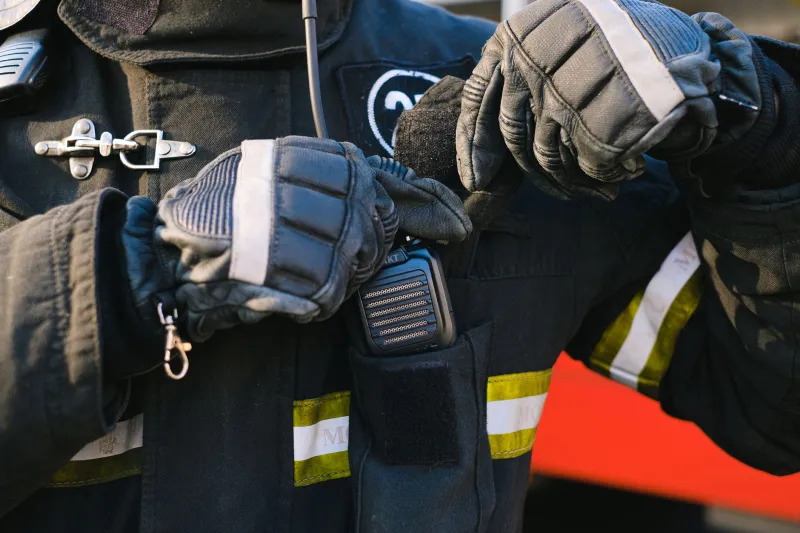
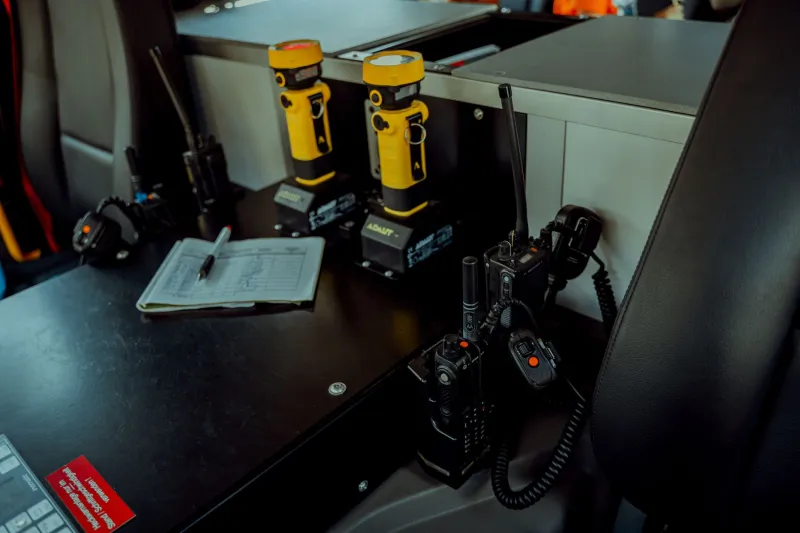
Law enforcement, fire, and EMS agencies operate in various parts of the VHF and UHF spectrum, with many systems now using digital trunked formats. Aviation communicates in the 108–137 MHz range—VHF for civilian aircraft, with military using UHF. You can listen to aviation traffic with a capable scanner, which is genuinely fascinating and a great way to understand how frequency coordination works in real time.
Transmitting on public safety or aviation frequencies without authorization is a serious federal offense. This is one of those "know the rules" situations where ignorance isn't a defense.
Why This Knowledge Actually Matters
Understanding the frequency map isn't just trivia. It shapes the decisions you make when buying gear. It explains why a radio that works great in one context is useless in another. It helps you figure out what licenses you actually need, what equipment is worth investing in, and how to build a communications plan that holds up when cell networks go down.
The spectrum above your head is shared infrastructure—like roads or water systems—except almost nobody teaches civilians how it works. That's a gap worth closing. Whether you're shopping for your first handheld or building out a serious home station, knowing the lay of the land makes every choice sharper.
Gear up, tune in. The frequencies are already there. Might as well know what they're doing.