Fading Signals: The Quiet Crisis Threatening America's Amateur Repeater Networks
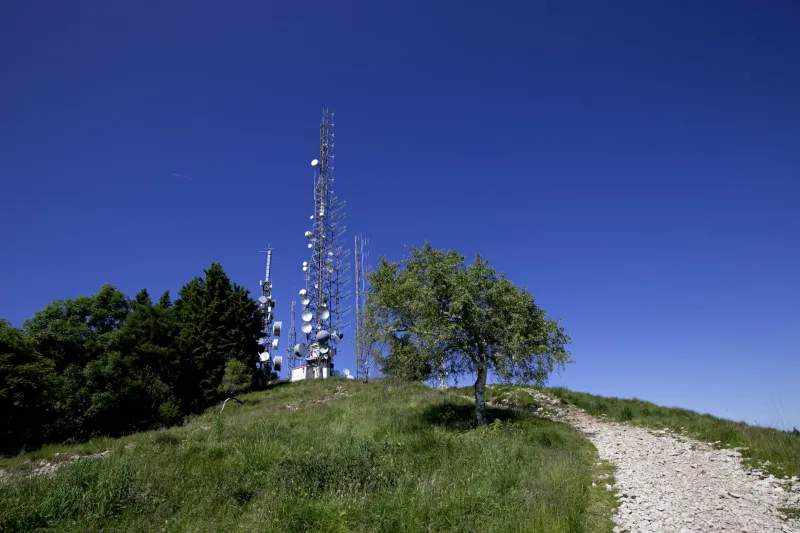
Drive through almost any mid-sized American city and you'll find at least one repeater listed in a club directory that hasn't reliably keyed up in months. Maybe years. The frequency is still listed. The trustee's callsign is still attached. But when you try to make a contact, there's nothing but dead air.
This isn't a fringe problem. It's happening in rural counties in the Midwest, in suburban clusters around major metros, and even in areas that were once considered model examples of organized amateur radio infrastructure. The repeater network that many hams take for granted—the one that extends your handheld's range across an entire county, that patches into ARES and RACES emergency systems, that gives new licensees their first taste of on-air conversation—is under real, sustained pressure.
And most of the hobby isn't talking about it loudly enough.
The Infrastructure Is Older Than You Think
A lot of repeaters running today were installed in the late 1980s and early 1990s. That's not an exaggeration. Controllers from that era, duplexers, cavities, and even the repeater radios themselves have been running continuously—sometimes from exposed hilltop sites or equipment rooms with minimal climate control—for three or four decades.
Repeat that back to yourself: three or four decades of continuous operation.
Some of this gear has been lovingly maintained. Other installations are running on borrowed time, held together by the institutional memory of one or two aging volunteers who know exactly which connector needs reseating after a thunderstorm and which relay tends to stick in cold weather. When those people step back from the hobby—or worse, become silent keys—that knowledge walks out the door with them.
Replacement parts for older controllers are increasingly hard to source. Proprietary systems from manufacturers that no longer exist create dead ends for even skilled technicians. And climbing a tower or accessing a remote site to do maintenance isn't something just anyone can or should do.
Volunteer Fatigue Is Real
Here's an uncomfortable truth about repeater operation: it's mostly invisible labor. When a repeater is working well, nobody thinks about it. Nobody calls the trustee to say thanks. Traffic flows, nets run on schedule, and everyone goes about their day.
But when something breaks—a power supply fails, the site loses commercial power and the backup batteries are depleted, a firmware update bricks the controller—suddenly everyone notices. And the same small group of people who have been quietly maintaining the system for years is expected to drop everything and fix it.
Trustees and repeater coordinators across the country describe a pattern that's become almost universal: a core group of two or three people doing the majority of the work, surrounded by a much larger population of users who enjoy the resource but rarely contribute to sustaining it. As that core group ages out or burns out, the workload doesn't redistribute—it collapses.
This isn't a criticism of the broader amateur community. Life gets busy. Not everyone has the technical skills or physical ability to climb towers or diagnose RF problems. But the gap between users and contributors has grown wide enough to become a structural problem.
Money Matters More Than the Hobby Likes to Admit
Amateur radio has a complicated relationship with money. The culture prizes self-sufficiency and DIY ingenuity, and there's sometimes a reflexive discomfort around the idea of asking for financial support. But running a repeater isn't free.
Site rental fees, electricity costs, insurance, equipment replacement, and coordination fees add up. A well-maintained hilltop repeater might cost a club anywhere from a few hundred to several thousand dollars a year to keep operational, depending on location and site agreements. When club membership shrinks—and it has been shrinking in many regions—those costs fall on fewer and fewer people.
Some repeater groups have found creative solutions. Annual fundraising nets, where listeners pledge support during a live on-air event, have worked well for some clubs. Others have partnered with local businesses or emergency management agencies who recognize the public safety value of a functioning repeater network and are willing to contribute to its upkeep. A handful of groups have moved to lightweight digital infrastructure that dramatically cuts power and maintenance costs.
None of these are perfect solutions. But they're real ones, and they're working in communities that decided to treat the funding problem as something worth solving.
What Individual Operators Can Actually Do
If you're a licensed ham who uses a local repeater—even casually—you have more leverage than you might think. Here are concrete ways to help:
Check in regularly. Active traffic on a repeater is one of the best arguments for keeping it funded and maintained. Nets, ragchews, and even just monitoring with occasional check-ins demonstrate that the resource is being used.
Join the club that owns it. Many repeaters are club-owned, and club membership fees directly support operations. If you're using a repeater without being a dues-paying member of the organization that maintains it, consider changing that.
Offer specific skills. General offers to "help out" often go nowhere. Instead, lead with what you can actually do. Are you an electrician? A software developer who could help with a linked network setup? Someone with a truck who can haul equipment to a remote site? Specific offers are far easier to act on.
Spread the word about licensing. More licensed operators means a larger potential pool of contributors—technical volunteers, donors, and club members. If you know someone who's been curious about ham radio, help them get there.
Advocate for your repeater with local emergency management. Many county and municipal emergency management offices don't fully understand the role that amateur repeaters play in their communications backup plans. Educating them—and potentially formalizing a relationship—can open doors to funding, site access, and institutional support that individual clubs can't easily obtain on their own.
The Stakes Are Higher Than They Look
It's tempting to frame this as a niche problem—something that affects hobbyists and doesn't have broader consequences. That framing is wrong.
Repeater networks are woven into emergency communications infrastructure across the country. ARES groups depend on them. Served agencies plan around them. When a major weather event, wildfire, or infrastructure failure knocks out commercial communications, these systems are often the first alternative that trained volunteers reach for.
A repeater that's been limping along on failing hardware is exactly the one most likely to fail when conditions are worst. The time to fix that is not during a declared emergency.
The amateur radio community built something genuinely remarkable over decades—a distributed, volunteer-operated communications network that covers most of the country and costs taxpayers nothing. Letting that infrastructure quietly decay because the maintenance culture hasn't kept pace with the user culture would be a real loss, not just for hobbyists, but for the communities that depend on it.
The signal is still there. It just needs people willing to keep it on the air.


