Not Too Cheap, Not Too Fancy: Why the Middle of the Radio Market Is Where the Smart Money Lives
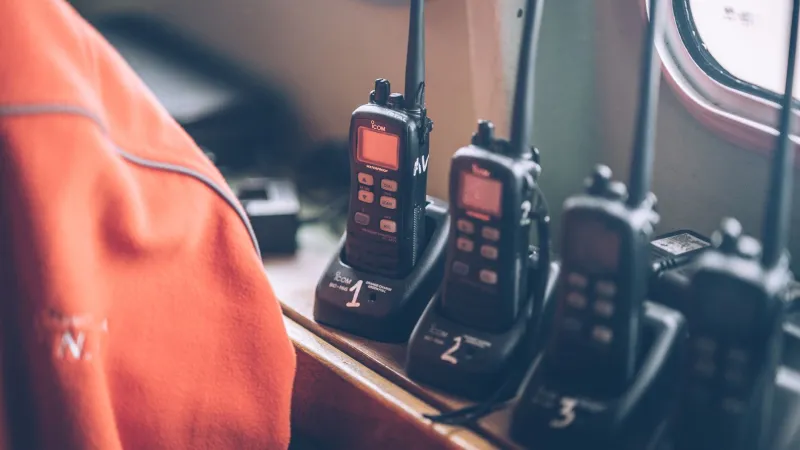
Every hobby has its version of the Goldilocks problem. In amateur radio and communications gear, it goes something like this: you start with a $30 handheld from an online marketplace, it dies or disappoints, and you convince yourself the only logical next move is a $600 flagship. What nobody tells you is that there's a whole tier of equipment sitting between those two extremes—and it's where most experienced operators quietly land after a few years of trial and error.
Mid-range radios, roughly the $100–$300 bracket depending on the category, don't get the flashy reviews. They don't have the "wow, look how cheap" factor of budget gear, and they lack the aspirational appeal of top-shelf hardware. But if you care about actually using your radio—in the field, in emergencies, on road trips, or just day-to-day—this is the tier that tends to hold up, perform consistently, and not leave you wishing you'd spent differently.
Let's break down why.
What Budget Radios Actually Cost You
The appeal of a sub-$50 handheld is obvious. You get something that transmits and receives, checks a few spec boxes, and doesn't require you to think too hard about the purchase. For someone just curious about the hobby, that's not a terrible starting point.
But budget radios come with hidden costs that don't show up on the product listing. Build quality is the first casualty—plastic housings that crack under moderate pressure, battery contacts that corrode faster than they should, and buttons that start sticking after a year of regular use. Audio quality on many entry-level handhelds is noticeably muddy, which matters a lot when you're trying to copy a transmission in a noisy environment like a parking lot, a campsite, or anywhere with wind.
Then there's the programming situation. Many bargain handhelds require proprietary cables and software that can be a nightmare to work with, and firmware bugs sometimes never get patched. You end up spending more time wrestling with the radio than actually using it.
None of this means budget radios are useless. But for anyone planning to use their equipment seriously—even occasionally—the savings often evaporate faster than expected.
The Premium Trap
On the other end of the dial, premium radios are genuinely impressive pieces of engineering. High-end offerings from manufacturers like Yaesu, Icom, and Kenwood pack in features that serious operators legitimately need: wider frequency coverage, advanced DSP filtering, rugged MIL-SPEC housings, and receiver performance that can pick up weak signals that cheaper radios simply can't hear.
If you're a contesting operator, a serious DXer, or you're building out a full base station setup for emergency communications, that investment makes sense. The gear earns its price tag.
But a lot of buyers end up in premium territory not because they need those features, but because they got burned by a budget radio and overcorrected. They pay for capabilities they'll never use, interfaces more complex than their use case demands, and a learning curve that can actually slow down how quickly they get comfortable operating.
There's also the wear-and-tear reality. A $500 radio that rides along in a go-bag, gets dropped on a gravel trail, or sits in a hot truck cab is a $500 risk every time you take it out. Some operators end up being so careful with premium gear that they actually use it less.
Where the Middle Tier Earns Its Reputation
Mid-range radios thread the needle in ways that matter practically. Take the Yaesu FT-65R as an example—a dual-band handheld that sits comfortably around the $100 mark. It's not going to win any spec sheet competitions against a flagship, but it's built solidly, programmed easily, and performs reliably in the kinds of situations most operators actually face. Drop it, and it survives. Use it for a few years, and the buttons still feel right.
In the mobile radio space, something like the Kenwood TM-V71A (which lands in the $300–$350 range) offers dual-band operation, a solid receiver, and a feature set that covers the vast majority of what amateur operators and ARES/RACES volunteers actually need—without demanding the kind of setup complexity that some higher-end rigs require.
For GMRS users and family preparedness setups, mid-range options from Midland and Wouxun offer real weather resistance, better audio clarity than entry-level alternatives, and battery life that holds up across a full weekend of use.
The pattern holds across categories: mid-range gear tends to hit 80–90% of the performance ceiling at 40–50% of the flagship price. For most real-world use cases, that math is hard to argue with.
Features That Actually Matter vs. Features That Look Good on Paper
One of the clearest ways to understand the mid-range advantage is to look at which features genuinely affect day-to-day use versus which ones exist to justify a price tag.
Things that matter: receiver sensitivity, audio output quality, battery capacity and charging options, build durability, ease of programming, and weather resistance. Mid-range radios from reputable manufacturers consistently deliver on all of these.
Things that mostly live on spec sheets: ultra-wide frequency coverage for bands you'll never use, touchscreen interfaces on handhelds (which are genuinely harder to use with gloves), and software-defined features that require a laptop to configure properly.
When you filter out the noise, mid-range gear often wins on the features that actually shape your experience.
The Practical Buying Framework
If you're trying to figure out where to land, here's a simple framework that works for most buyers:
Start by defining your primary use case. GMRS for family communication, amateur radio for emergency preparedness, mobile operation for road trips—each one has a different sweet spot in the mid-range tier.
Set a ceiling before you start shopping. It's easy to get pulled upmarket once you start reading spec comparisons. Decide what you're willing to spend, then find the best mid-range option within that number rather than letting reviews talk you into doubling your budget.
Prioritize build quality and manufacturer support. A $150 radio from a brand with solid US customer support and available replacement parts is a better long-term investment than a $150 radio from a company with no US presence and inconsistent firmware updates.
Don't pay for ceiling you won't hit. If you're primarily using simplex frequencies and local repeaters, you don't need the receiver performance of a contest-grade rig. Buy for what you'll actually do.
The Bottom Line
The radio market is good at selling extremes. Budget gear sells on price, premium gear sells on prestige, and the middle tier just quietly does the work.
For the majority of US operators—whether you're a licensed ham, a GMRS user building a family preparedness plan, or someone who just wants reliable communications for outdoor adventures—mid-range gear is where your money works hardest. You get durability that holds up in real conditions, features that match real use cases, and a price point that doesn't make you nervous every time you pull the radio out of your bag.
The best radio isn't the most expensive one you can afford. It's the one you'll actually use, confidently, when it matters.