Scanner Speak: A Plain-English Guide to What Emergency Services Are Actually Saying on the Air
You did everything right. You picked up a decent scanner, found your local fire department's frequency on a public database, and settled in expecting to follow the action in real time. What you got instead was a stream of cryptic number combinations, abbreviated location codes, and dispatcher shorthand that left you more confused than informed.
Welcome to the world of public safety radio—where the language is compressed, the pace is fast, and the codes vary wildly depending on which county, city, or department you're listening to. The good news is that none of this is impenetrable. It just takes a little context.
Why Public Safety Radio Sounds Like Code (Because It Is)
Emergency services didn't develop shorthand to keep civilians in the dark. They developed it because radio communication under pressure demands speed and clarity. When a dispatcher needs to relay information to multiple units simultaneously, saying "Ten-Four, copy" is a lot faster than "Understood, message received, please continue your response."
The system most people recognize is the APCO Ten-Code system, developed in 1937 by the Association of Public-Safety Communications Officials. These numeric codes—10-4, 10-20, 10-33—were designed to standardize communication across agencies. And for decades, they worked reasonably well.
The problem? Standardization never fully happened. Different states, counties, and individual departments started adding their own local codes on top of the national framework. So 10-50 might mean a traffic accident in one jurisdiction and a mental health call in another. That inconsistency is exactly why, after the communications failures during 9/11, FEMA began pushing agencies toward plain language protocols—dropping codes entirely in favor of just saying what's happening.
Today, you'll encounter a patchwork. Some departments have gone fully plain language. Others still run on Ten-Codes. Many use a hybrid. And rural volunteer fire departments? They may have their own system that predates all of it.
The Codes You're Most Likely to Hear
Even with the push toward plain language, a handful of codes remain nearly universal across US public safety agencies. If you're monitoring emergency frequencies, these are worth knowing cold:
- 10-4 – Acknowledged / Message received
- 10-20 – Location ("What's your 10-20?" means "Where are you?")
- 10-33 – Emergency traffic only / Officer needs help (context-dependent)
- 10-76 – En route to location
- 10-97 – Arrived on scene
- 10-98 – Assignment complete
- Signal 1000 – Major incident (used in some southeastern states)
Beyond Ten-Codes, you'll run into Q-Signals—a shorthand system originally developed for Morse code communication by maritime and amateur radio operators. These show up occasionally in public safety contexts, especially in more rural or older departments:
- QSL – Confirmed / Acknowledged
- QRZ – Who is calling?
- QTH – Location
Amateur radio operators will recognize these immediately. If you're already licensed, you've got a head start on at least part of the vocabulary.
Where to Find Your Local Codes
Here's the part most scanner guides skip: the codes in your county might not match anything in a national reference chart. So what do you do?
RadioReference.com is the single best starting point for US listeners. Beyond just listing frequencies, many entries include agency-specific code lists submitted by local hobbyists and enthusiasts. The database is crowdsourced and remarkably detailed—if your local PD uses a code sheet, there's a decent chance someone has already uploaded it.
Your county sheriff's office or fire department website sometimes publishes communication protocols in publicly available documents, particularly if they've adopted NIMS (National Incident Management System) plain language standards. It's worth a Google search before you assume the information isn't out there.
Local scanner clubs and Facebook groups are underrated resources. Hobbyists in your area have often spent years decoding exactly what you're trying to figure out. Someone in your metro area almost certainly has the local code sheet saved as a PDF.
For on-the-fly lookup, apps like Scanner Radio and Broadcastify let you listen to live feeds with community notes attached—sometimes including real-time translation of unusual codes from other listeners.
What You're Legally Allowed to Do With This Information
This part matters, so let's be direct about it.
In the United States, monitoring public safety frequencies is completely legal under the Communications Act. You are not doing anything wrong by tuning in to your local fire department or police dispatch. These frequencies are public by design—the information broadcast on them is considered publicly available.
What you cannot do is use that information to aid in the commission of a crime. Several states have laws specifically prohibiting the use of a scanner to evade law enforcement. And while it's legal to listen, retransmitting or rebroadcasting public safety communications without authorization crosses into federal territory.
As for acting on what you hear—use common sense. If you pick up chatter about a structure fire two blocks away, it's perfectly reasonable to avoid that street. What you should not do is show up at the scene to "help" or relay information to third parties in ways that could interfere with an active response. Emergency scenes have enough going on without well-meaning civilians adding to the chaos.
The role of the informed scanner listener is to be a knowledgeable community member, not an auxiliary responder.
Building Your Own Reference Sheet
Once you've gathered your local code information, the most practical thing you can do is build a simple reference sheet tailored to your area. This doesn't need to be elaborate—even a one-page document organized by agency (fire, EMS, police) with the most common codes and their meanings will dramatically improve your comprehension.
Organize it by frequency first, then by code type. Keep it near your scanner. Update it when you notice something that doesn't match—codes get revised, departments adopt new systems, and the landscape shifts more often than you'd expect.
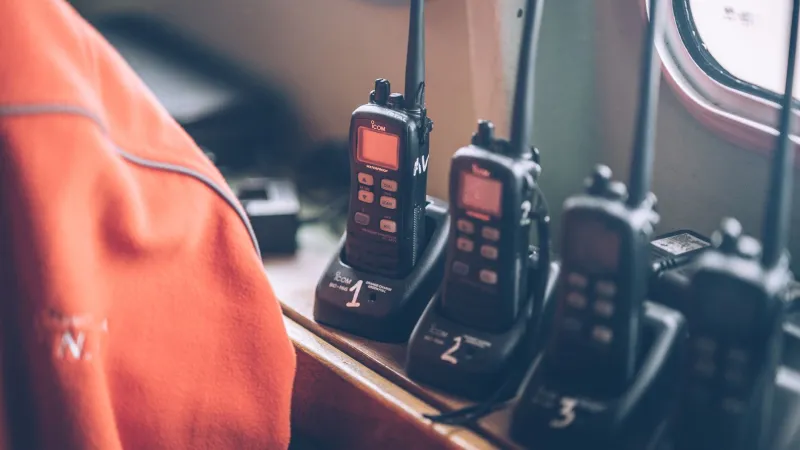
If you're using a programmed handheld or base station with a display, some radios let you assign alpha tags to channels—short text labels that tell you which agency you're listening to at a glance. That one feature alone makes following multi-agency incidents significantly easier.
The Bigger Picture
There's something genuinely valuable about being a literate scanner listener in your community. When a major weather event hits, when there's a prolonged search and rescue operation, when infrastructure fails—people who understand what's being communicated on public safety frequencies can make better decisions for themselves and their families.
That's the real payoff here. Not the novelty of hearing dispatch traffic, but the situational awareness that comes from actually understanding it. The codes aren't there to exclude you. They're just the shorthand of a system that developed over decades under pressure.
With a little homework and the right reference materials, you can follow along just fine.